
Taxes: An Introduction

Worksheets


Games in This Lesson
Curriculum Standards used in this Lesson:
Financial Literacy
- 12-6: Federal, state, and local taxes fund government-provided goods, services, and transfer payments to individuals.12-7: The major types of taxes are income taxes, payroll taxes, property taxes, and sales taxes.12-8: The type and amount of taxes people pay depend on their sources of income, amount of income, and amount and type of spending.12-10: Tax deductions and credits reduce income tax liability.
- 12-6: Tax policies that allow people to save pretax earnings or to reduce or defer taxes on interest earned provide incentives for people to save.
Essential Question: How do income taxes work?
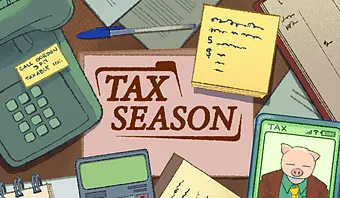
Overview: Students play Tax Season: Audit Adventure, and file simplified income tax returns to understand key concepts related to taxation.
Introduction: Players take on the role of a tax accountant in a zany world. Each “year” the player will fill out tax forms for a variety of kooky characters like a werewolf gym owner who keeps ripping their shirt, or a ghost with a vacation rental side business.
While filing returns in this game feels like an other-worldly adventure, the tax system still mirrors U.S. income tax rules. The game gradually teaches players how the U.S. income tax system works (income, deductions, credits, progressive taxation, and even LLC pass-through taxation) through humor, oddball characters, and escalating challenges.
Objectives: The student will…
- Learn about different types of income and which are taxed
- Learn about deductions (both itemized and standard deductions), credits, and the difference between them
- Learn about progressive taxation and the myth of the “progressive tax cliff”
- Encounter characters in different careers and stages of life to see how their income is taxed
- Learn about business taxes, types of income, payroll taxes, and state and local taxes
Standards: Jump$tart Coalition National Standards for Personal Financial Education (2021)
Earning Income:
- 4-3: There are different ways to be paid for labor, including wages, salaries, commissions, and tips.
- 4-7: Most income is taxed by the government to pay for government-provided goods and services
- 8-7: People are required to pay taxes on most types of income, including wages, salaries, commissions, tips, earnings on investments, and self-employment income.
- 12-2: Compensation for a job or career can be in the form of wages, salaries, commissions, tips, or bonuses, and may also include contributions to employee benefits, such as health insurance, retirement savings plans, and education reimbursement programs.
- 12-7: The type and amount of taxes people pay depend on their sources of income, amount of income, and amount and type of spending.
- 12-9: Tax deductions and credits reduce income tax liability.
- 12-10: Retirement income typically comes from some combination of continued employment earnings, Social Security, employersponsored retirement plans, and personal investments.
- 12-11: Owning a small business can be a person’s primary career or can supplement income from other sources.
Saving:
- 12-6: Tax policies that allow people to save pretax earnings or to reduce or defer taxes on interest earned provide incentives for people to save.